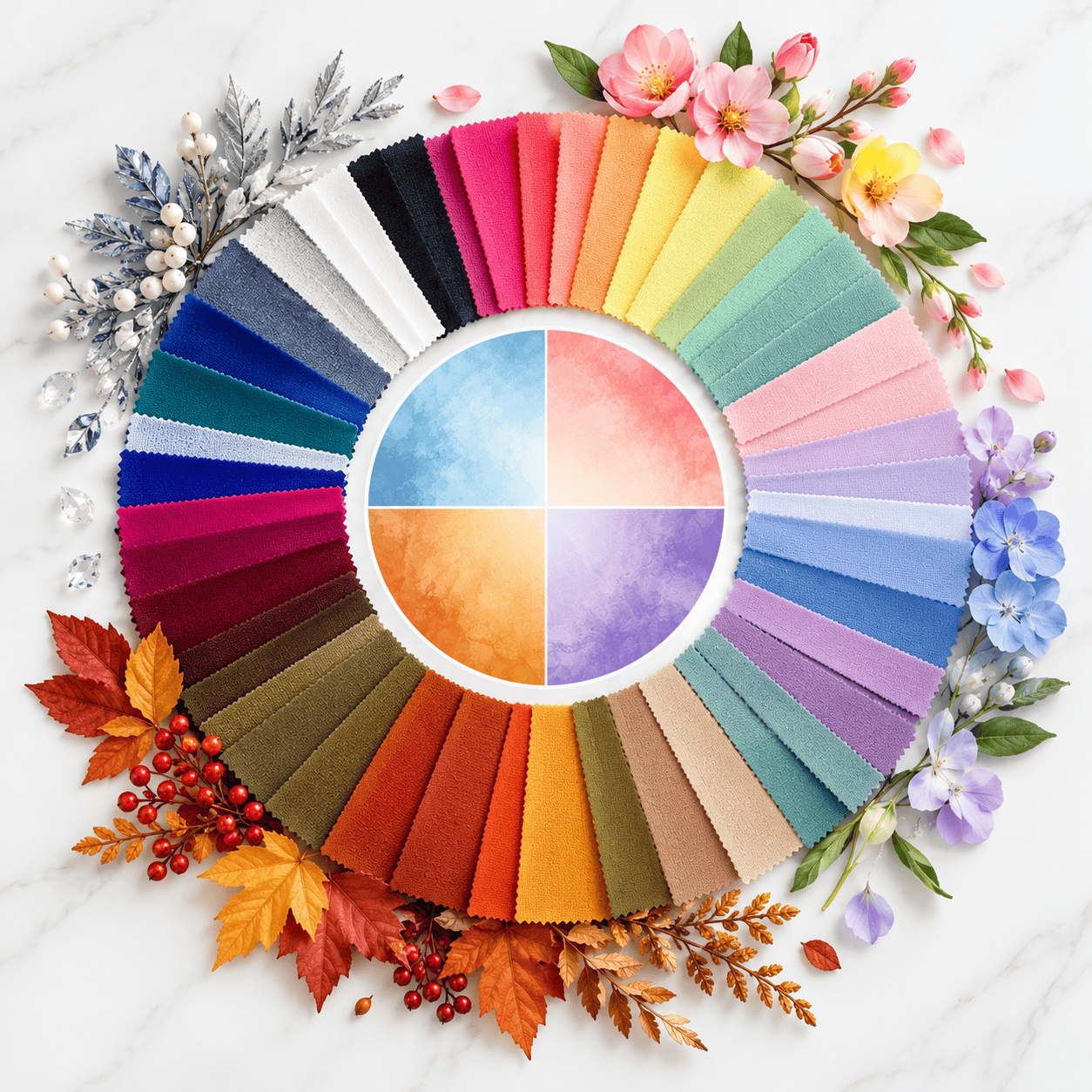
Welcome to our series on the different types of color analysis systems. With the tremendous growth of color analysis as a service in recent years, it is helpful to realize that there are many different ways of doing color analysis. Each system has it’s own language and often its own core philosophy about how color theory is understood and presented.
Ultimately we use all the systems of color analysis to improve the lives of other people by showing them their natural beauty. But the system you choose to use for your own color analysis business affects the marketing and the conversations you’re having about using color.
In this series I will seek to cover the dominant methods of color analysis that are common today, to show you how they all form an interconnected way of looking at the uniqueness of human coloring.
What is the flow system of color analysis?
Flow color analysis is based on the simple idea that you are a primary season, influenced by a secondary season.
In traditional color analysis, there are four original seasons (called Big Four moving forward). Each of these has unique and individual characteristics that bind all expressions within:
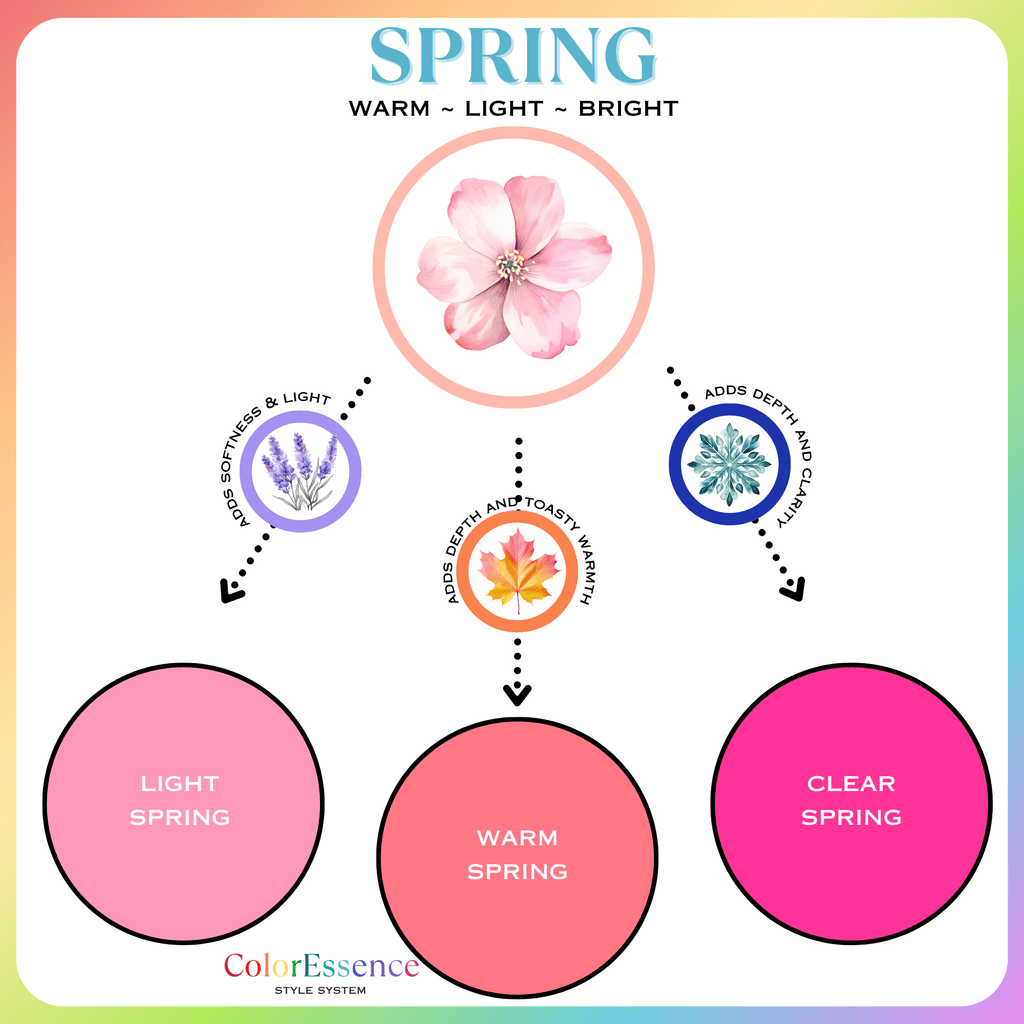
- Spring – based on the idea that new growth peeks through after a long and cold winter, spring is freshness personified in color. This means warm-toned and light in value.
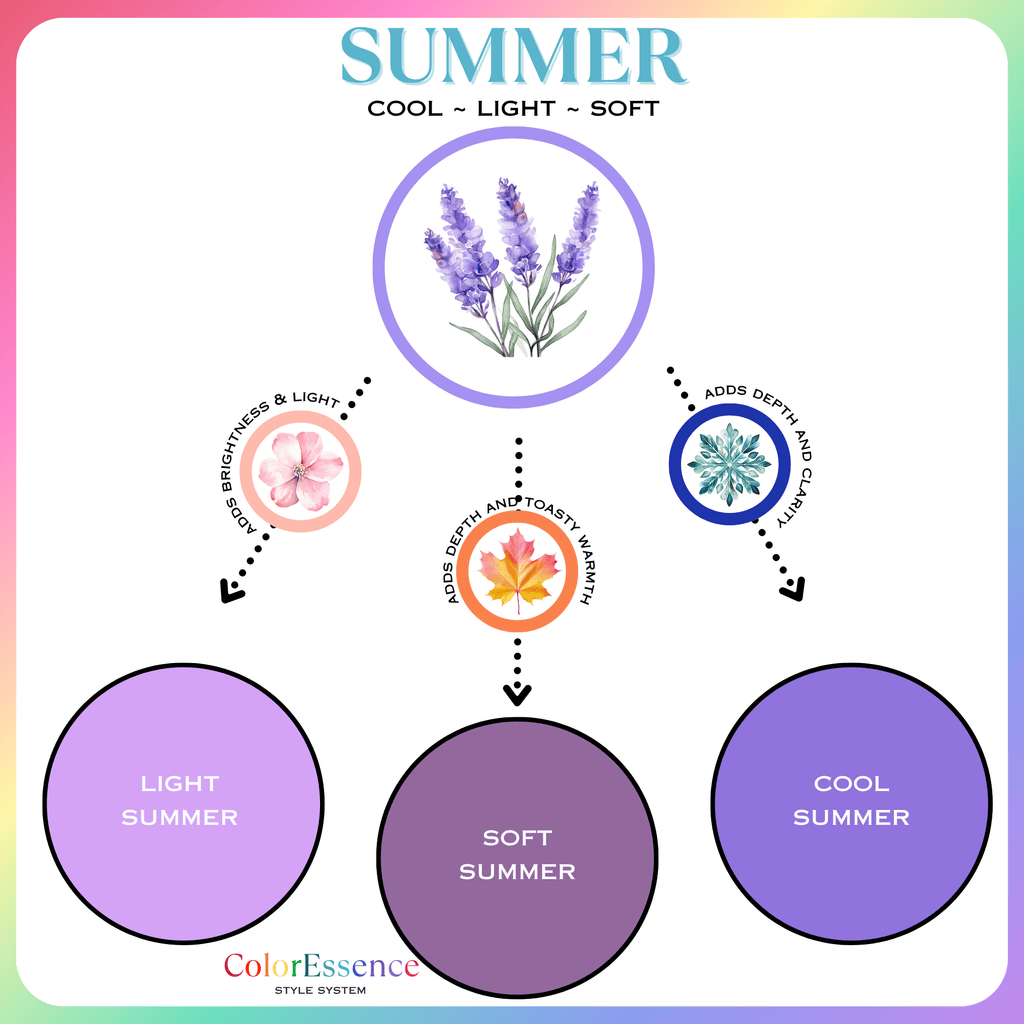
- Summer – based on the soothing nature of a cooling ocean breeze and an ice cold lemonade, summer is misty cool colors. This means cool-toned and light in value.
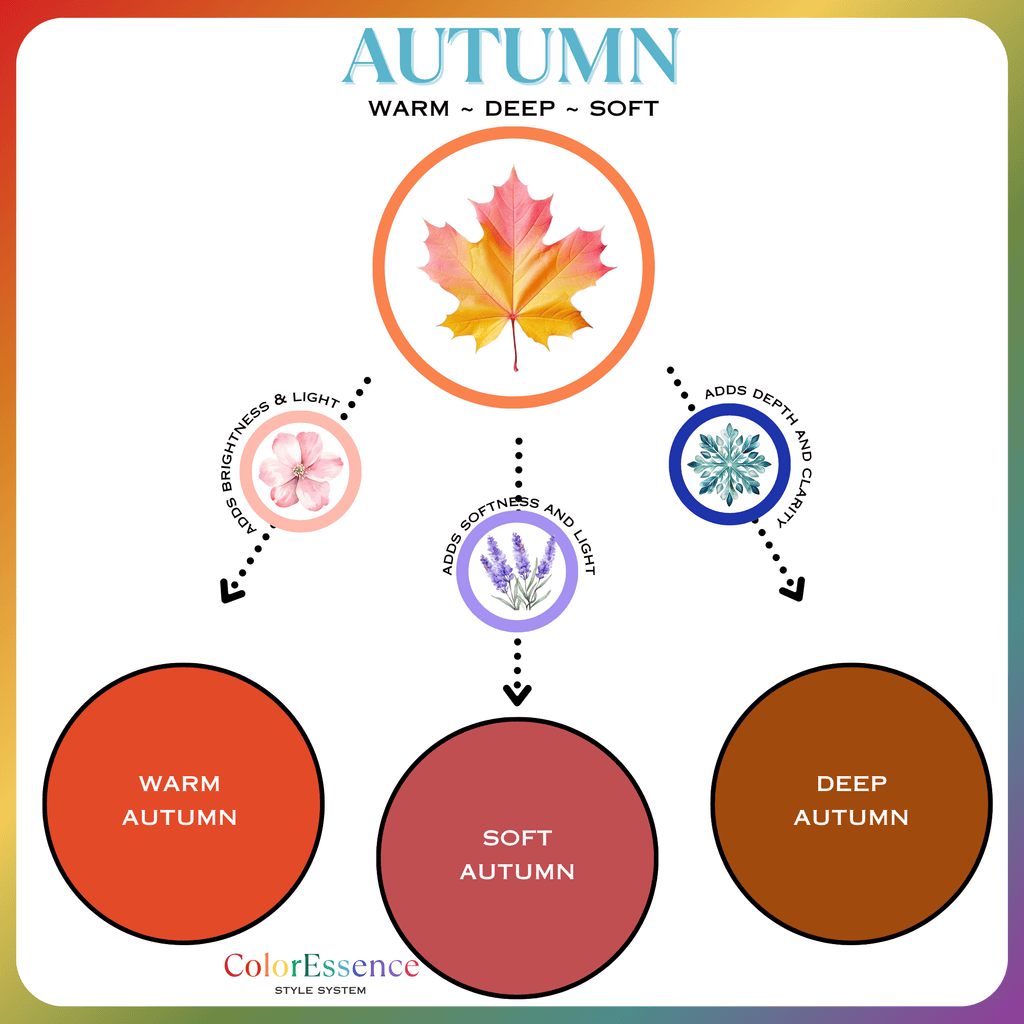
- Autumn – reflecting harvest preparedness and long golden days, autumn is toastiness brought to life in color. This means warm-toned and rich in depth.
- Winter – inspired by the inward focus of hibernating and icy stillness, winter is steely clarity of color. This means cool-toned and rich in depth.
Each of these Big Four seasons is expressed in multiple dimensions per individual: the way skin reacts to color, the unique patterns in the eyes, the way lipstick absorbs and reflects, and even simple personality commonalities.
For a complete overview of the Big Four seasons, continue here.
The 12-Seasons built on flow color analysis
When we extend the concept of the four seasons to create relationships between them, we can build an interconnected 12 season system of color analysis
By adding a secondary seasonal influence, we alter the dimensions of the original color.
- Spring as a secondary influence adds freshness through reducing the value or lightness and increasing the brightness, contrast, or clarity.
- Summer as a secondary influence adds softness by reducing value and lightness and increasing the muted or pastel nature of colors.
- Autumn as a secondary influence adds richness by increasing the depth or value Prand adding a muddy or toasted quality.
- Winter as secondary influence adds intensity by increasing the depth or value and clarifying brightness, contrast, and intensity.
This builds a comprehensive color analysis system that accounts for the natural expression of color:
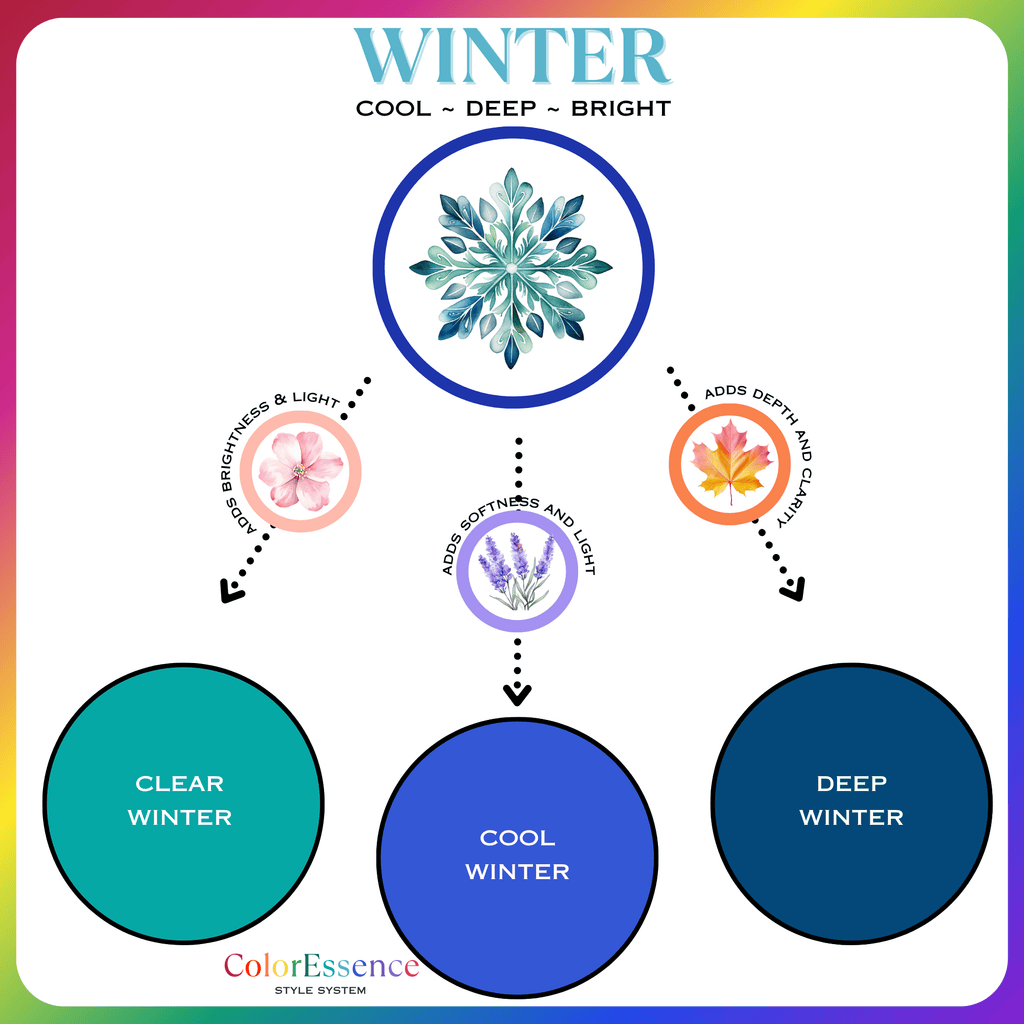
Pros and Cons of Flow Color Analysis
Pros:
- 12 seasons are the most frequently searched (4.8 million per month) and easily recognizable across systems. Using an established system with well-known language makes it easier for your clients to understand the process. It also makes it easier to market your services to those aware of the seasons.
- Provides parameters and hard rules for classifying people: summer and winters must be cool, springs and summers must be light, winters and springs must be clear. This boundaries require expertise and confidence to be sure clients are getting an accurate color profile.
- The seasons are interconnected and don’t exist separate from each other. Summer can bridge with any of the other three seasons, ensuring complete coverage of all manifestations of color.
- A framework of 12 seasons gives a foundation for batching products and content creation, so you always have something to share.
Cons:
- Many types of 12-season systems exist, so there is no shared foundation for the entire color analysis industry. One person’s take on Deep Winter may differ from another’s.
- Outlier clients who fall within a smaller range of colors may feel limited in their color selections. This is why it’s important to create custom palettes for each client.
- Labeling the appropriate secondary season is more difficult within the confined constraints of the Big Four Seasons. If both winter and spring add clarity, which one is actually the one? We teach you how to read individual clues to make the best determination.
How to find a season with Flow Color Analysis
Our 5-Step Color Analysis Method is designed to help you find client’s season in the 12-season system by using the following process:
- Examine the Eyes – eye patterns are unique to each person and correlate to the Big Four Seasons. We use this clue to assess quality of the eyes and potential season influences.
- 4 Color Drape Test – test the pure expressions of the four original seasons using specific color families of red, green, purple, and pink.
- Extended Draping – we use more drapes that represent the purity of each of the Big Four seasons, searching for dominance and strong secondary indicators.
- Test the Neutrals – after eliminating some season contenders, we look at variations in black, gray, brown, white, navy, and metals to confirm best fit seasons.
- Best Colors – using color theory principles we mix and primary and secondary season to find the best mix of colors for that individual client.
If you would like to learn our proprietary 5-Step Color Analysis method for accurate and confident color analysis, click here to explore training.
Final Review of Flow Color Analysis
Flow color analysis offers a clear and memorable way to understand the 12 season color analysis system. By pairing a primary season with a secondary influence, you can see how Spring, Summer, Autumn, and Winter connect to create every natural expression of human coloring.
Like any seasonal color analysis system, it has strengths and limits, and the real skill lies in reading each client’s unique clues with confidence. Whether you’re new to color analysis or building your color analysis business, understanding flow gives you a strong foundation for the other systems we’ll explore in this series.
And if you’re ready to put this into practice, our color analysis certification teaches the full 5 step method so you can deliver accurate results to every client.
Learn the 5-Step Color Analysis Method
Comprehensvie coor theory, practice cases, guided casptone project, plus ongoing support.